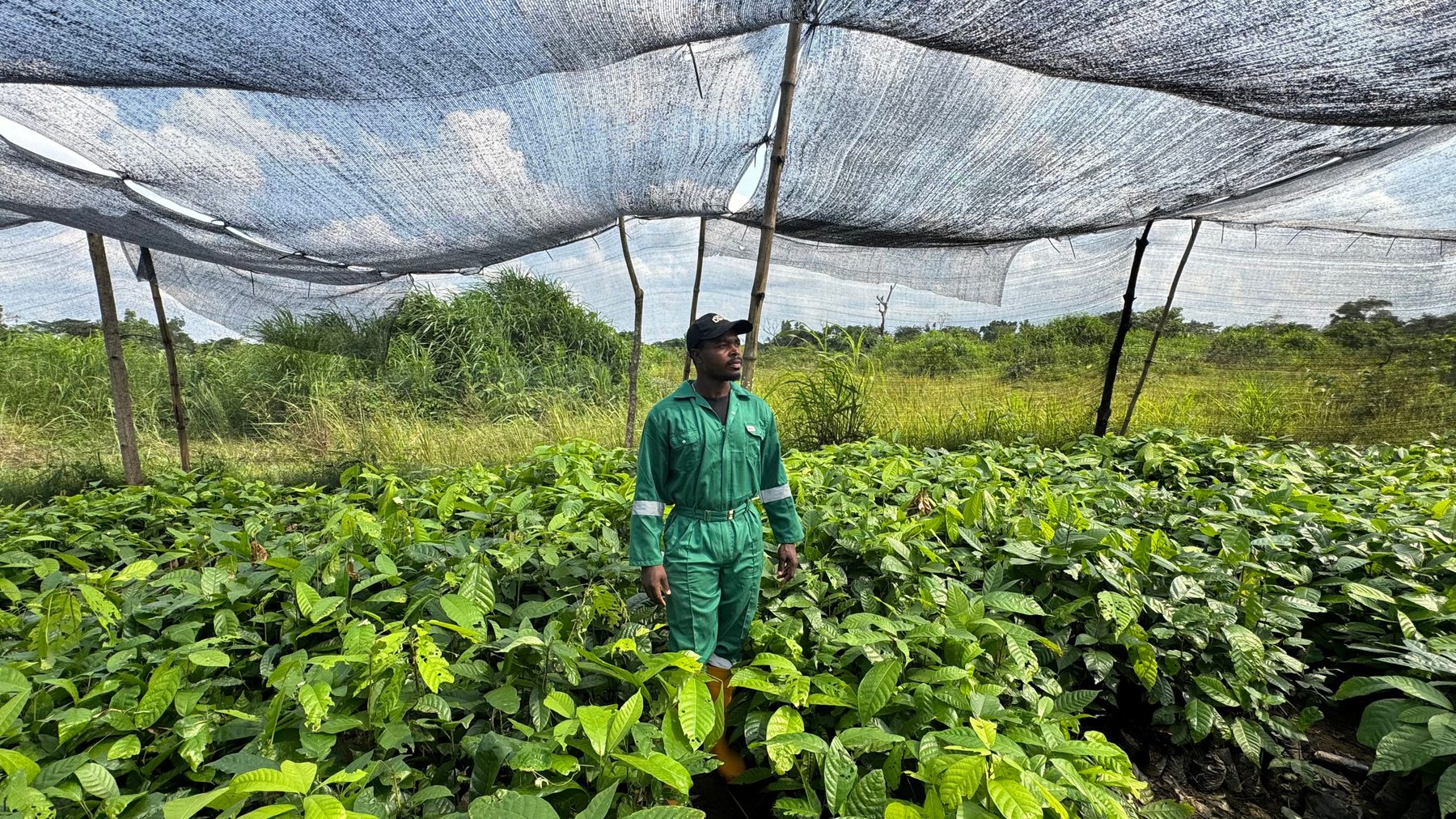
Seedlings raised under shade net.
Young cocoa is fragile. Before anything reaches the field, seedlings are raised in our on-site shade-net nursery, where net cover moderates sun and heat while air keeps moving — the right environment for a tropical climate, rather than a sealed structure built for a European one.
The same shade-net logic carries into our greenhouse product: ventilated structures designed for Nigerian heat, not enclosed designs that overheat. Growing our own seedlings on site means we control plant quality from day one and hardening-off happens in the same conditions the plants will live in.
Four practices, all in use today.
Each of these is running on the hectares under cultivation now. As the estate expands, the same system expands with it.
Intercropping: cocoa under plantain
Plantain is planted alongside young cocoa so its canopy shades the seedlings through their vulnerable early years — the same reason it produces the estate's first income, around month 10, while cocoa establishes toward its first harvests in year 3.
Drip irrigation
Water is delivered to the root zone through drip lines rather than flooding or spraying, supporting year-round growth through the dry season with far less waste.
Grid-independent solar
Estate power runs on solar rather than the grid or diesel generators — a practical necessity at Amaechi Idodo, and a quieter, cleaner way to run pumps and equipment.
Precision agriculture, per plot
Every plot is GPS-mapped in Farmwise and every activity — planting, inputs, treatments — is logged against it. That per-plot record is what feeds quarterly investor reports.
You may notice this page has no water-savings percentages, carbon figures, or jobs-created counts. That is deliberate. Our operation is young — field work began in July 2025 — and we will publish impact metrics as they are measured on our own plots, not before. We would rather publish real numbers late than impressive numbers never.